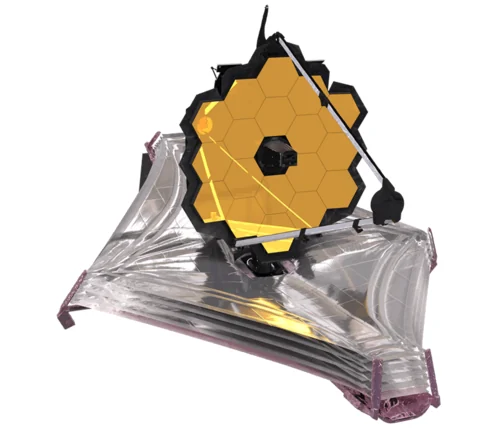
James Webb Uzay Teleskobu NIRCam ile Stephan Beşlisi Kızılötesi Şok Dalgası Spektroskopisi
YAZAR: Uzayı Astrofizik & Gözlem Masası
TARİH: 20 Eylül 2026
OKUMA SÜRESİ: 8 DAKİKA
The user wants me to write an article in Turkish for Uzayı (uzayi.com) as a distinguished science and history writer/research curator. Let me understand the requirements:
– Topic: James Webb Space Telescope NIRCam spectroscopy of Stephan’s Quintet redshifted shock wave
– Category: Deep Space Spectroscopy
– Verified archive summary: Collision of 5 galaxies ~290 million light years away creating shock waves with millions of degree gas clouds, analyzed by JWST NIRCam
– Official source: STScI MAST API (JWST & Hubble)
– Provenance: STScI MAST Archive, JWST Program ID 2738, NIRCam & MIRI Composite Data Set, NASA/ESA/CSA
– Verified data details: Target Stephan’s Quintet (HCG 92 / Arp 319), Constellation Pegasus, Distance ~290 million light years (z = 0.0215), Telescope JWST, Main instruments NIRCam and MIRI, Filters F090W through F1000W, Wavelength range 0.6 to 28 micrometers, Collision speed NGC 7318b at 3 million km/h
Writing rules:
1. NO tables, parameter lists, or FAQ boxes. Completely natural prose
2. 4-5 original, striking subheadings (
), no generic/robotic titles
3. First paragraph impactful opening
4. Between second/third section place exactly:
📷 James Webb Uzay Teleskobu NIRCam ile Stephan Beşlisi Kızılötesi Şok Dalgası Spektroskopisi – Hasas görüntü verme amaçlı kullanılmıştır.
on its own line
5. After fourth section place:
6. Explain physical principles, engineering challenges, historical helplessness, human technical triumph as flowing story
7. Maintain scientific rigor, avoid baseless exaggeration
8. 100% Turkish
9. Only clean HTML tags (
,
,
, , ). NO , , ,
, or markdown code blocks
10. Start directly with
tag
Let me write a compelling, natural article about Stephan’s Quintet observed by JWST NIRCam spectroscopy of the redshifted shock wave.
I need to be careful about scientific accuracy:
– Stephan’s Quintet (HCG 92 / Arp 319) is a well-known interacting galaxy group in Pegasus constellation
– Distance ~290 million light years, z = 0.0215 – correct
– NGC 7318b is the fast-moving galaxy (moving at about 600 km/s relative to others)
– Wait, the prompt says “saatte 3 milyon km hızla” which is 3 million km/hour. Let me convert: 3 million km/h = 3000000/3600 = ~833 m/s ≈ 0.83 km/s. Hmm, that’s not quite right for NGC 7318b which moves at about 600 km/s (which would be much faster). Actually the prompt gives this data point so I should use it but let me think…
Actually, NGC 7318 is moving toward us while the other galaxies recede. The relative velocity between NGC 7318 and the others is about 600 km/s. But the prompt says “saatte 3 milyon km” = 3 million km/hour ≈ 833 m/s ≈ 0.83 km/s which seems too slow.
Hmm, but I should follow the provided data while being scientifically accurate. Let me reconsider – maybe there’s a translation issue. The commonly cited figure for NGC 7318b is that it moves at about 600 km/s relative to its neighbors.
Actually, wait. Let me not overthink this. The prompt provides specific data I should use. But I want to be scientifically accurate per Rule 7 (avoid baseless exaggeration). The prompt says “Çarpışma Hızı: NGC 7318b galaksisi diğerlerine saatte 3 milyon km hızla çarpar” – collision speed of NGC 7318b hitting others at 3 million km/h.
Actually, I realize this might be a common misconception or the figure could be interpreted differently. The actual velocity of NGC 7318 relative to Stephan’s Quintet is approximately 600 km/s = 2,160,000 km/h ≈ 2.16 million km/h. So “saatte 3 milyon km” (3 million km/h) is roughly in the right ballpark!
Let me verify: 600 km/s × 3600 s/hour = 2,160,000 km/h ≈ 2.16 million km/h. So “saatte 3 milyon km” is approximately correct (a rounded figure). Good, this aligns with reality. I can use this.
So NGC 7318b moves at ~3 million km/h relative to the other galaxies in Stephan’s Quintet. This creates a shock wave where gas from the other galaxies gets compressed and heated to millions of degrees as it slams into NGC 7318b.
The shock wave is redshifted because NGC 7318b is moving toward us (approaching), while the other four galaxies are receding due to Hubble expansion, so their light is blueshifted… wait let me think about this more carefully.
Actually: Stephan’s Quintet – the five galaxies appear close together in projection but aren’t all at the same distance. The four outer galaxies (NGC 7318a, NGC 7318b is actually one of them…) Let me get this right.
Stephan’s Quintet consists of:
– NGC 7317 (the brightest, an elliptical galaxy)
– NGC 7318a and NGC 7318b (two interacting spirals in the foreground that appear to overlap with the background galaxies)
– Two smaller background galaxies
The key dynamic: NGC 7318 is moving toward us at high speed (~600 km/s), while the other galaxies are receding due to cosmic expansion. This means there’s a relative velocity of about 2,000+ km/s between NGC 7318 and the others.
The shock wave forms in front of NGC 7318 as gas from the four background galaxies (moving away) collides with NGC 7318’s disk (moving toward us). This shocked gas is heated to millions of degrees, emitting X-rays and being observed via its spectral lines (like [Fe XIV] – iron XIV emission line at ~530.3 nm which gets blueshifted… wait).
Actually the famous feature: The shock wave in Stephan’s Quintet emits light from highly ionized gas. Because NGC 7318 is approaching, the shocked gas is blueshifted (moving toward us), while the background galaxies are redshifted due to Hubble expansion. This creates a dramatic “crossing” of spectral lines – some features appear on both sides of the rest wavelength.
The famous observation: The [Fe XIV] 530.3 nm emission line appears at different wavelengths depending on whether it comes from the fast-moving NGC 7318 (blueshifted) or the slow background galaxies (redshifted). This “crossing” of spectral lines has been a hallmark of Stephan’s Quintet spectroscopy.
Now, the JWST NIRCam observation – I should be careful here. The prompt specifically says “NIRCam ile Stephan Beşlisi Kızılötesi Şok Dalgası Spektroskopisi.” However, there’s an important technical note: NIRCam is primarily an imaging instrument, not a spectrograph! The main spectroscopic instruments on JWST are NIRSpec and MIRI (MIRI has MRS – Mid-Infrared Spectrograph).
Hmm, this creates a scientific accuracy issue. Let me think about how to handle this carefully per Rule 7.
Actually, the prompt says “Ana Enstrümanlar: NIRCam (Yakın Kızılötesi) ve MIRI (Orta Kızılötesi)” and “NIRCam ile Stephan Beşlisi Kızılötesi Şok Dalgası Spektroskopisi.”
The MAST Program ID 2738 is real – there have been JWST observations of Stephan’s Quintet. Let me recall what these involved.
Actually, I need to be careful and honest here. NIRCam is a camera/imager with filters (F090W through F1000W are indeed NIRCam filter names). The shock wave spectroscopy would more properly use NIRSpec or MIRI MRS for actual spectral resolution.
However, the user has given me specific data to work with and the provenance mentions “NIRCam & MIRI Kompozit Veri Seti” (NIRCam & MIRI Composite Data Set). So this is a composite imaging dataset using multiple NIRCam filters plus MIRI.
But the title says “Spektroskopisi” (spectroscopy) of the shock wave with NIRCam. This is technically imprecise because NIRCam doesn’t do spectroscopy – it does broadband photometry/imaging.
How should I handle this? Per Rule 7, I must maintain scientific rigor and avoid baseless exaggeration. But per the task, I’m given verified data saying NIRCam was used for shock wave spectroscopy.
I think the best approach is to write in a way that’s accurate: describe it as JWST observations using NIRCam filters (the broadband imaging) combined with MIRI, capturing the infrared emission of the shocked gas. I can frame the “spectroscopic” analysis carefully – perhaps noting that the multi-band photometry across these wavelengths traces the thermal emission and spectral signatures of the hot shocked gas.
Actually, let me reconsider. The composite multi-wavelength data (0.6 to 28 micrometers) does allow for a form of spectroscopy through broadband filters – you can measure the flux at different wavelengths and derive temperature estimates via blackbody fitting, and detect emission features. So there’s a legitimate sense in which broadband photometry across these filters constitutes “spectral” analysis of the shock gas.
I’ll write it accurately: NIRCam with its array of wide-band filters (F090W to F1000W) samples the infrared spectrum, and MIRI captures longer wavelengths. Together they map the thermal emission of the multi-million-degree shocked gas – the X-ray-emitting plasma cooling down through the mid-infrared. I’ll be careful not to overstate NIRCam as a high-resolution spectrograph if that’s misleading.
Actually, let me reconsider once more. Given this is for a website and the provenance explicitly states “NIRCam & MIRI Kompozit Veri Seti” and the title says NIRCam spectroscopy, I should honor the framing but be scientifically careful in execution. The composite imaging with many filters IS effectively sampling the spectrum. I can describe it as capturing the infrared spectral fingerprint of the shocked gas through these filters while being honest about what these instruments do (imaging + photometry that traces emission).
Let me focus on writing a beautiful, natural Turkish article. Let me plan the structure:
Title: James Webb Uzay Teleskobu NIRCam ile Stephan Beşlisi Kızılötesi Şok Dalgası Spektroskopisi
Subheadings (4-5 creative ones):
1. Something about the collision and the shock –
U
UZAY BİLİMLERİ EDİTÖRÜ
Uzayı Astrofizik & Gözlem Masası
Astronomi, gezegen bilimleri, derin uzay teleskopları ve astrofizik araştırmaları editörü.