
 •
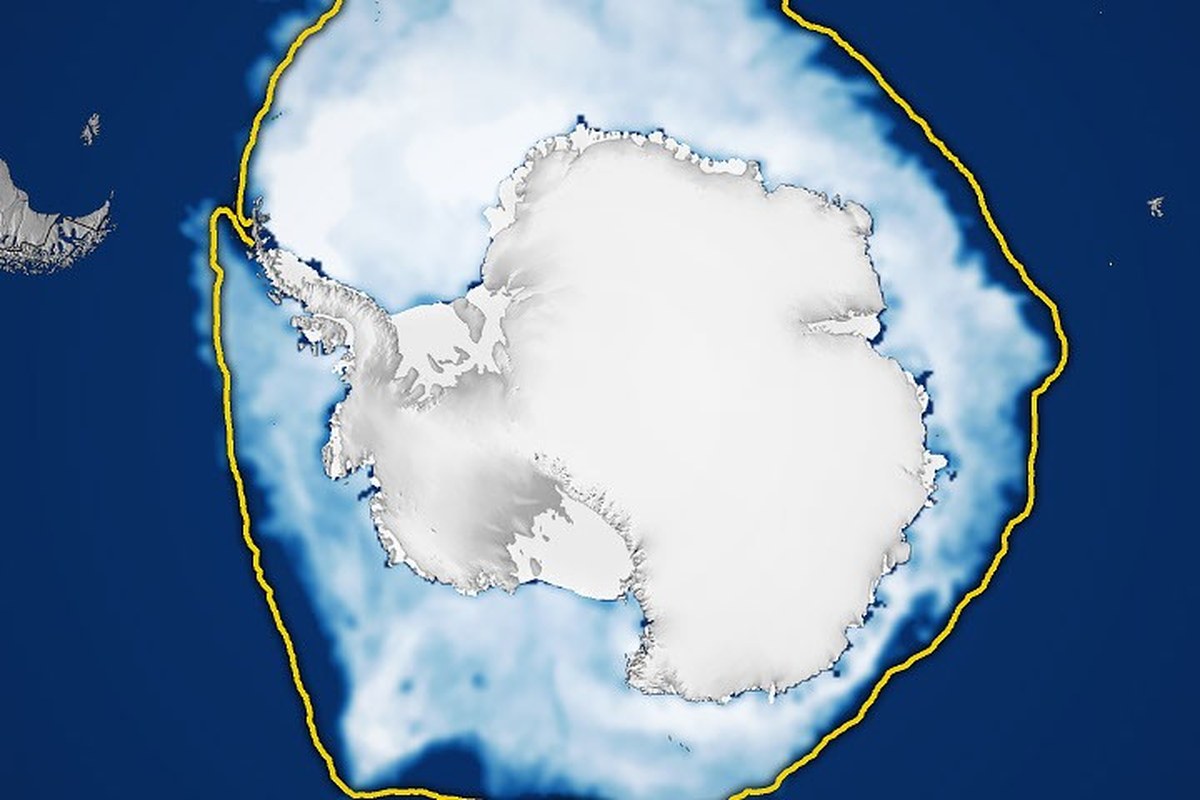
•NASA and the National Snow and Ice Data Center (NSIDC) report that Antarctic sea ice reached its annual maximum on September 14, 2026, when the ice cover reached approximately 17.59 million square kilometers (6.79 million square miles). This value is the third lowest maximum on record since satellite observations began, according to a NASA Earth Observatory report.
According to the NASA Earth Observatory, Antarctic sea ice typically reaches its maximum in September, at the end of the Southern Hemisphere’s winter, and reaches its minimum in February. Unlike the Arctic, which is an ocean basin surrounded by land, Antarctica is a large landmass surrounded by ocean; this geographical feature provides more space for the sea ice to expand during the winter. However, it also means that the ice sheets extend further toward warmer latitudes, leading to more melting in the summer.
The article is an updated version of the Antarctic sea ice feature in the World of Change series, which is produced in collaboration with the NSIDC and uses satellite imagery to monitor long-term changes on Earth’s surface.

Current data show that total Antarctic sea ice has increased by about 1% per year from 1979 to 2014. However, it is unclear whether this increase is a sign of a meaningful change; because the ice cover around Antarctica varies greatly from year to year. In 2012-2014, three consecutive years in which satellites observed new records in the maximum winter sea ice, occurred during a period when Arctic ice sheets were in a steep decline.
To determine the extent of sea ice, scientists rely on satellites equipped with passive microwave sensors that measure the microwave energy naturally emitted by the Earth. Sea ice emits more of this energy than open water, making it stand out in microwave images. Microwaves pass through clouds, allowing satellites to observe sea ice regularly, regardless of weather conditions.























Nog geen reacties